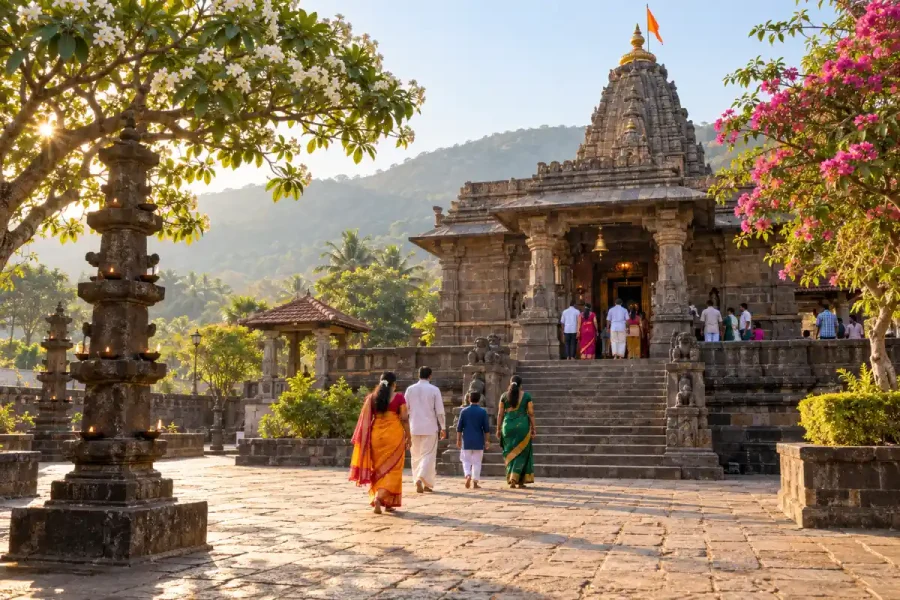
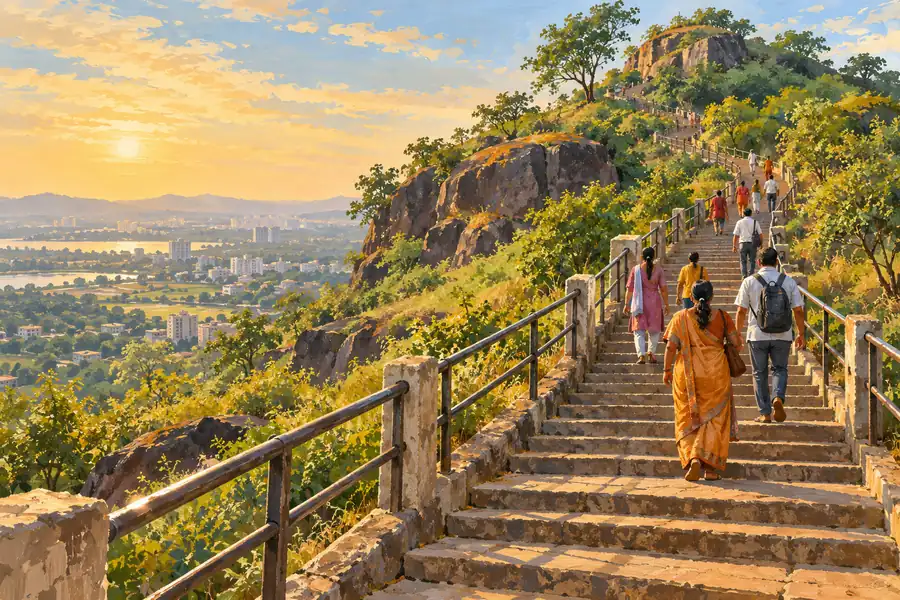
Jivdani Temple is one of Virar’s best-known religious landmarks, set on a hill on the eastern side of the city. A visit combines darshan with a journey uphill, so good planning begins before reaching the temple base. Choose the ascent around your group’s comfort and give worship its own time once you arrive.
I recommend making the temple the main purpose of the outing. Decide whether you want to climb the steps or enquire about the funicular, check the current arrangements and leave enough time for the descent. This guide brings together the temple’s official information and a practical plan for a first visit with family or friends.
Where Jivdani Temple is located
The shrine is on Jivdani hill in Virar East, in the Vasai region of Palghar district. Virar railway station is the useful rail arrival point for the usual city-side approach. From there, a local transfer takes you to the base area; reaching the station does not complete the uphill part of the journey.
The Palghar district temple page places the shrine above a long stair approach, described as around 1,375 steps. Other accounts round the climb to about 1,400. The important planning point is that this is a substantial ascent, not a short flight of steps beside the station.
- Destination: Shree Jivdani Devi Temple, Jivdani hill, Virar East, Maharashtra.
- Visit focus: darshan, the hill approach and time at the temple.
- Ascent choices: stair route or a funicular option, subject to current operating arrangements.
- Planning priority: choose the ascent before travelling and include the return descent.
The map searches for the temple. Confirm the relevant base entrance or funicular boarding location separately. A hilltop destination marker does not mean a car can take you directly to the shrine.
The temple’s story and religious setting
The temple trust’s account describes Jivdani hill and relates a legend involving the Pandavas and the worship of the Goddess. Read that narrative as a religious tradition shared by the temple, rather than as an independently established archaeological chronology.
The trust also connects the hill with a fort called Jivdhan. For a visitor coming for darshan, the useful perspective is that the hill has several layers of meaning: the shrine, the tradition associated with it and the wider hill setting. There is no need to turn the visit into a search for every historical feature.
Give yourself a little time to learn who is worshipped here and why the place matters to devotees. With children, a short explanation before arrival can make the visit more meaningful. Keep the conversation respectful and allow others the quiet they need for prayer.
How to reach the base from Virar station
Arrive at Virar and use the eastern side for the usual temple approach. Arrange an auto or another suitable local connection to the base entrance you need. Show the full temple name and clarify whether you want the stair approach or the funicular boarding area.
Confirm the fare arrangement before the ride and keep the group together during the transfer. If someone in the family is arriving separately, share one exact meeting point rather than a broad temple pin. A base-area meeting and a hilltop meeting involve different journeys.
The Vasai regional travel guide explains how to separate a train journey from the final local transfer. For Jivdani, add the ascent as a third stage and the descent to the return plan. This gives a more useful estimate than measuring only the distance from the railway station.
If driving, confirm the current parking location and access instructions at the base. Save the vehicle’s position and check the route back before beginning the ascent. Leave time for the walk from parking to the entrance, particularly when the temple has special arrangements for an occasion.
Choose between the stair route and the funicular
Taking the steps
The stair route may suit visitors who specifically want to make the climb and are comfortable with a long ascent. Start at a pace that the whole group can maintain. Include short breaks and water rather than using someone else’s fastest climbing time as a target.
Remember that the descent is part of the effort. Keep enough energy and time for it, and do not let a hilltop photograph or meal plan pressure the group into rushing. Use the designated route, keep passages clear and follow instructions wherever visitor movement is organised.
For a family, decide in advance how you will stay together. Younger children should remain with an adult, and bags should be compact enough to carry comfortably. If a companion prefers another ascent arrangement, settle the meeting point before separating.
Enquiring about the funicular
Pilgrim Data Services’ temple guide describes a cable-operated funicular train as an ascent option. A funicular travels on a steep rail route; it should not be confused with a freely suspended cable car simply because some listings use the word ropeway.
Confirm whether it is operating on your date, the boarding point, ticket arrangements and return availability. Ask about any remaining steps or walking between the vehicle and shrine. The existence of an ascent service alone does not establish a completely step-free visit.
For an older relative or anyone with a mobility requirement, enquire about the exact access needed before leaving home. Choose the plan from those answers rather than arriving with an assumption that the funicular will remove every physical part of the journey.
Aarti timings: what the official website lists
The Shree Jivdani Devi Sansthan website lists morning aarti at 5:30 am, afternoon aarti at 12:00 pm and evening aarti at 7:30 pm. These are the times displayed when checked for this guide. Confirm the schedule with the temple for your visiting date, especially around festivals or special observances.
Aarti times are not the same as a complete opening-hours schedule or the operating hours of the funicular. If you want to attend a specific aarti, plan the train, local transfer and ascent backwards from it. Leave room for queues and arrival procedures rather than aiming to reach the base at the prayer time.
If a specific aarti is not essential to your visit, choose a time that gives your group a comfortable journey and unhurried darshan. The purpose is to participate thoughtfully, not to fit every listed session into one outing.
Give darshan a calm place in the schedule
On reaching the temple, follow the current queue and instructions for footwear, bags, offerings and photography. Keep belongings organised before entering so you can give attention to worship and avoid holding up the flow of other visitors.
Ask which offerings are accepted before buying them. Keep packaging together and use the designated arrangements for disposal. If you wish to donate or book a religious service, use the temple’s official information rather than an unidentified person or an unverified link.
For children, explain simple expectations: stay with the family, follow the queue and keep voices low near prayer spaces. Let them ask questions at a suitable moment afterwards. A visit can introduce the setting and practice without needing a long explanation during darshan.
A practical visit sequence
Begin by checking the day’s temple and ascent arrangements. Travel to Virar, reach the confirmed base entrance and organise water and personal essentials before going up. If using the funicular, include ticketing and waiting in the plan; if climbing, start at an easy shared pace.
At the top, allow time for darshan and a rest before discussing photographs or the return. Do not schedule the whole visit around one predicted queue duration. The amount of time needed can change with the occasion and visitor flow.
Return by the arrangement you confirmed and meet at the agreed base point. A meal afterwards makes a relaxed finish. For a mixed-age group, the family outing guide helps you keep the rest of the day flexible rather than adding several more attractions.
Weather, festivals and what to carry
Choose clothing and footwear suitable for the approach, and carry drinking water and necessary personal items. Check the forecast before a walking ascent. Sun, rain and the actual condition of the steps affect how comfortable the climb feels, even when the destination is familiar.
Navratri and other important occasions can involve different queues and visitor arrangements. If the occasion is the reason for your visit, organise the outing around the temple’s current instructions and allow a generous time window. Do not combine a festival visit with a tight second booking elsewhere.
For a regular visit, keep bags light and secure. Check any facilities or food arrangements you need rather than relying on an old account of what was available. A simple meal before or after the ascent can work better than carrying more than the group can comfortably manage.
Enjoy the hill setting and plan another outing
Where photography is allowed, take a few pictures from permitted public viewpoints and keep circulation areas clear. Ask before photographing other devotees. Avoid moving towards an edge or leaving the designated area for a wider view; the temple visit provides plenty to remember without an elaborate pose.
If you enjoy combining nature with darshan, the Tungareshwar temple and forest guide offers a different outing for another day. Its approach and access arrangements are distinct from Jivdani, so give it a separate plan.
For a later meal in the wider region, the Vasai family restaurant guide gives ideas, with addresses to compare against your return route. At Jivdani, I would keep the day centred on a comfortable ascent, thoughtful darshan and an easy descent. Those choices make the hilltop visit feel complete.