Reaching Vasai becomes much easier when you plan for the exact place you want to visit. Vasai Road railway station, Vasai Fort, the coastal villages and the eastern forest approach are different destinations. A journey that gets you into the region is only the first part; the station exit and local transfer complete the trip.
I recommend beginning with three decisions: your final destination, your main mode of travel and your return arrangement. This guide explains the rail and road options, helps you choose between the eastern and western sides, and shows how to turn a broad “Mumbai to Vasai” search into a journey you can actually follow.
Where Vasai sits in the wider region
Vasai-Virar is in Palghar district, north of Mumbai. The municipal corporation’s regional description identifies rail links and the Mumbai-Ahmedabad highway as important connections. It places the Arabian Sea to the west and the forested Tungar range on the eastern side.
That geography is useful for visitors. A beach or old-town outing generally takes you towards the western side, while the usual Vasai-side approach to Tungareshwar begins from the east. Set the full attraction or street address as the final destination rather than assuming every place called Vasai is close to the railway station.
The map below searches for Vasai Road railway station. Use it to orient your arrival, then open a separate destination map for the onward journey. It does not identify a particular platform, exit or vehicle pickup bay.
Reach Vasai by local train from Mumbai
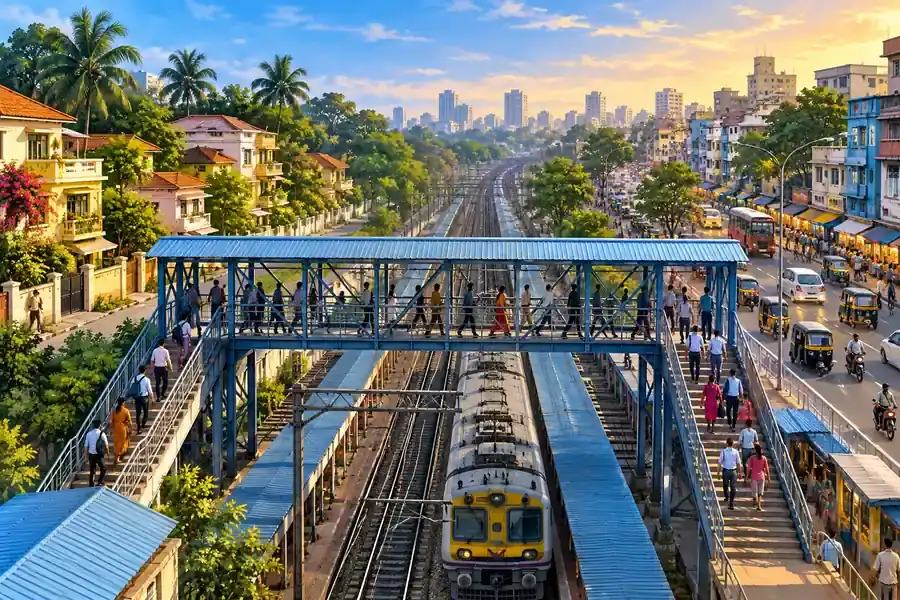
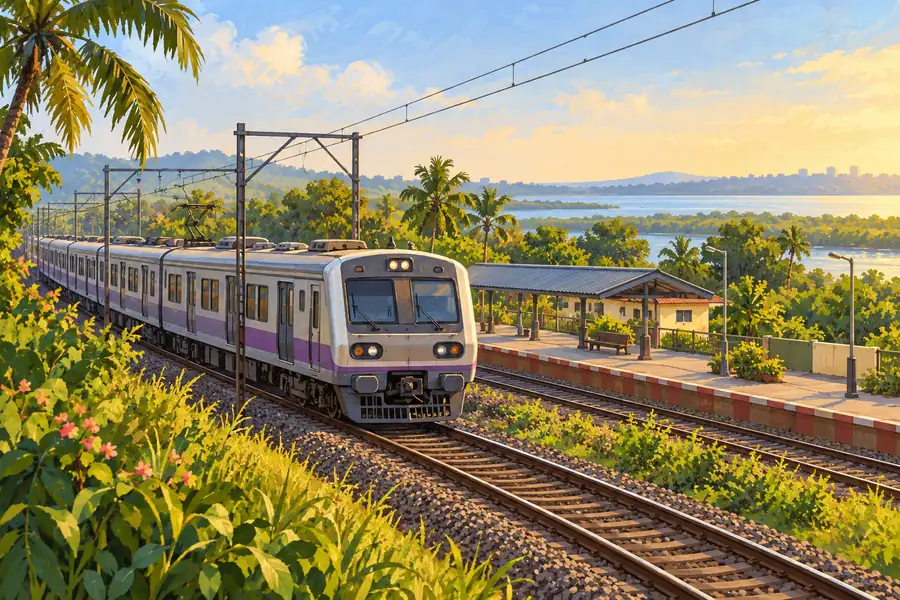
Vasai Road is on Mumbai’s Western suburban railway corridor. From a station on that corridor, look for a service that stops at Vasai Road. A train heading towards Virar is a common direction to check, but the destination display and stopping pattern should be confirmed for the particular service you intend to board.
A local terminating at Borivali or another station before Vasai Road will require an onward connection. Fast, slow and air-conditioned services can also differ in stops and ticket requirements. Choose your train by checking the actual service, rather than treating “northbound local” as enough information.
At the station, verify the platform on the current display or through railway staff. Buy the appropriate ticket for your route and class before boarding. Keep it available for inspection and make sure everyone in the group knows the intended destination, especially if you are travelling in separate compartments.
For a visitor unfamiliar with suburban travel, a little preparation helps: save the station name, know where you will board, and decide how the group will regroup after getting off. Allow time to leave the platform and reach the correct side before expecting the local vehicle pickup.
Coming from the Central line, Thane or Navi Mumbai
If your starting point is on another rail corridor, compare the available journey as a complete connection. A transfer to the Western line through an interchange such as Dadar may suit some starting points. Check the particular route, platforms and connection before leaving; an interchange adds walking and waiting to the trip.
The municipal description also notes the Vasai-Diva rail connection serving the wider region. This should not be interpreted as a frequent direct suburban service from every named city. Search the current trains for your exact origin and Vasai Road, then compare that option with an interchange journey.
For scheduled trains, the Indian Railways passenger enquiry website provides official enquiry links, including the National Train Enquiry System. Confirm the train’s date, stop and running information. For a reserved service, booking and availability need to be checked separately from whether a route exists.
When comparing two options, count the whole journey: travel to the departure station, transfers, waiting and the final local ride. A connection with fewer changes may be more comfortable for a family even if it is not the quickest theoretical route. Select the option that you can follow confidently.
Choose the correct side of Vasai Road station
| Your plan | Usual orientation | What to confirm |
|---|---|---|
| Vasai Fort and older coastal Vasai | West | Exact fort drop and return meeting point |
| Suruchi or Bhuigaon Beach | West | Chosen public approach and local transfer |
| Tungareshwar via the Vasai-side approach | East | Authorised entry, route and permitted vehicle drop |
| Restaurant, home or business visit | Address-dependent | Full address, branch name and map marker |
This table is an orientation aid, not a list of fixed bus stops. Follow current station signs and ask if you are unsure about the exit. Before calling a driver, confirm which side you have reached so that both of you are discussing the same pickup location.
For a heritage outing, the Vasai Fort travel guide gives the destination context and a walking plan. Share the attraction’s full name with the driver; simply asking for “Vasai” does not establish that you mean the fort.
Local buses, autos and the final transfer
Vasai-Virar has a municipal transport service. The corporation’s transport page provides timetable information. Check the route’s origin, destination, station side and current operating information before depending on it for a sightseeing connection.
If a linked document is dated, use it as a starting point and confirm the service locally. A timetable’s upload or search-result date is not necessarily the date of the service pattern inside it. Ask which stop is useful for your attraction and how much walking or additional transport remains after the bus.
For an auto, establish the exact destination and fare arrangement before setting off. A shared ride to a locality may differ from hiring the whole vehicle to an attraction. If you need a return pickup, agree on the time, location and whether waiting is included.
Groups should send one clear destination pin and address to everyone. Restaurant branches and beach approaches can share similar names, so include the selected branch or entrance. Save the meeting point before beginning a walk, and keep a small time buffer for finding the vehicle.
Reach Vasai by road
The Mumbai-Ahmedabad highway is a major regional connection. For a drive, enter the final destination and let current navigation show the appropriate approach from your starting point. Do not stop planning at the highway turn: the local streets and final entrance are part of the journey.
Road travel can be convenient when several people are travelling together or when the outing includes more than one stop. Compare a hired vehicle’s full arrangement with the cost of separate transfers. Clarify waiting time, extra distance, tolls and parking rather than comparing only an advertised starting fare.
If using your own vehicle, check the destination’s parking arrangements and leave space for residents and other traffic. A point on a map is not permission to park there. For a beach or forest visit, confirm where the authorised vehicle approach ends and whether walking is required beyond it.
Use a flexible arrival window instead of promising one fixed “Mumbai to Vasai” duration. The route changes with your starting location, destination, traffic and conditions. When an attraction closes at a particular time or a booking matters, build the schedule backwards from that commitment with room for the final transfer.
Arriving from Mumbai airport or another city
From Mumbai airport, compare a direct road transfer with a journey that first connects to a railway station. With luggage, children or an unfamiliar arrival time, a direct vehicle may simplify the trip. Confirm the terminal pickup and full Vasai address with the operator before arrival.
If choosing rail after a flight, count the transfer from the terminal to the station, ticketing and any interchange. It is a separate leg, not part of a single airport-to-Vasai train ride. Leave a comfortable buffer after landing rather than assuming baggage collection and the road connection will take a fixed time.
From another city, check whether your train actually stops at Vasai Road on the date you need. Not every train passing through the region serves the station. Compare the confirmed service with an arrival elsewhere in Mumbai followed by an onward journey, and select the option that fits your luggage and schedule.
Two examples of a complete journey plan
For a coastal evening, plan the main journey to Vasai Road, exit on the western side, and arrange the onward transfer to the chosen beach approach. Check sunset for the visiting date and allow time to arrive before it. The Suruchi Beach evening guide helps with the destination portion once the transport is settled.
For a forest-and-temple morning, arrive at Vasai Road, use the eastern side and confirm the currently authorised Tungareshwar drop. Check access before travelling, and allow for walking as well as the ride. The Tungareshwar visit guide explains why a temple outing and a longer trek need different plans.
Both examples use the station as an arrival point, then add a destination-specific transfer. This is the most useful way to estimate time and cost. A single distance between Mumbai and Vasai cannot answer how long your particular outing will take.
Budget and return planning
Divide the travel budget into the main journey, onward ride, return ride and any toll or parking costs. Confirm prices for the route and class you choose. Keep food and attraction spending separate so you can compare transport options clearly.
For the return, decide whether you will retrace the same route or leave from a restaurant or another stop. Check the current rail or bus option before committing to a late meal. Keep enough time to reach the station and find the correct platform rather than treating the vehicle drop as the train departure time.
If travelling with a family, the Vasai family day-out guide can help you keep stops on a manageable route. Settle the main journey, choose the right station side and arrange the final connection. With those decisions made, you can spend the outing enjoying Vasai instead of repeatedly working out where to go next.