
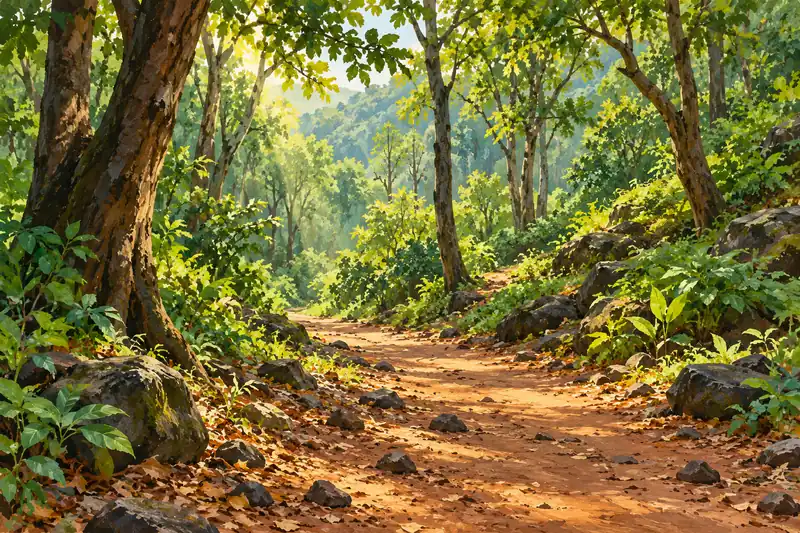
Tungareshwar brings a different kind of outing to Vasai: forest surroundings, a walking route and a visit to a Shiva temple in the same landscape. It is a good choice when you want to spend the morning looking at trees and listening to the forest, with darshan as a meaningful destination along the way.
I recommend deciding on the purpose before you travel. A temple visit, a short nature walk and a longer trek need different amounts of time and preparation. This guide is centred on a first visit that combines the temple approach with gentle nature observation, while keeping the current permitted route and your group’s comfort at the heart of the plan.
Understand the sanctuary and the temple as two connected experiences
Tungareshwar Wildlife Sanctuary is a protected forest landscape in the Vasai region. The temple is a religious destination within that wider setting. A journey made for darshan therefore also passes through an environment where wildlife, vegetation and forest management matter.
Nature inFocus’s Tungareshwar guide describes the sanctuary’s dry deciduous, moist deciduous and semi-evergreen forest types. That variety makes it worth noticing the vegetation during a walk, instead of treating the approach merely as the distance to complete before reaching the temple.
The temple is dedicated to Shiva and associated with the Sativali side of Vasai. Pilgrim Data Services’ temple account describes the worship spaces, including a Nandi in the hall and the Shiva shrine. It also identifies Shravan Mondays and Mahashivratri as important occasions for devotees.
For an ordinary first visit, you can enjoy both aspects without trying to complete an ambitious hill route. Choose the currently permitted temple approach, allow time for the return, and regard a longer forest trek as a separate plan that needs its own route information.
Quick planning notes for a first visit
- Destination: Tungareshwar Wildlife Sanctuary and Tungareshwar Mahadev Temple, Vasai region, Maharashtra.
- Rail starting point: Vasai Road station, using the eastern side for the usual Vasai-side approach.
- Suggested plan: a morning visit with several hours available for the approach, darshan, pauses and return.
- Carry: shoes with grip, drinking water, suitable clothing, a snack and a charged phone.
- Confirm first: entry arrangements, the open route, current fees, any vehicle permissions and the day’s restrictions.
Do not confuse the railway station, forest entry and temple into one destination pin. Confirm the entry you will use and how far your transport is currently permitted to go. The map below searches for the temple area; it is a location reference rather than proof of a drivable or open route.
How to reach the Vasai-side approach
Travel to Vasai Road and arrange the onward journey from the east towards the Tungareshwar approach. Show your driver the full destination and clarify whether the drop is at the forest entry or another authorised point. Settle that detail before the ride so the group knows where walking begins.
The Nature inFocus guide describes rail access through Vasai Road’s east exit. Its published transport frequencies and travel times are from an older guide, so check the current connection locally. The useful information is the orientation; today’s bus service, fare and road conditions need separate confirmation.
If driving, follow the current instructions at the entry for parking and onward vehicle access. A temple marker on a navigation app does not guarantee permission to take a vehicle to that marker. Ask about the return arrangement at the same time, particularly if your group is considering transport for part of the approach.
The guide to reaching Vasai can help you organise the broader rail or road journey. Keep a buffer between arrival at the station and the beginning of the walk, and avoid placing a meal reservation immediately after a tightly estimated return time.
Choose a temple walk before choosing a summit trek
For a first outing, I would make the temple the main turnaround destination, subject to the route being open. The older Nature inFocus account places it roughly three kilometres from the sanctuary gate. Treat that as an orientation reference, then ask locally about the distance and conditions from your actual entry point.
A walk of that scale includes the return journey, pauses and time at the temple. It should not be described as effortless simply because the destination is familiar to regular visitors. Plan according to the group’s walking comfort and the conditions you find rather than comparing your pace with another person’s trip report.
Before setting out, agree on a turnaround time. If the group reaches it before the destination, turn back together. This gives everyone a clear plan and keeps the outing within the daylight and transport window you arranged.
Continuing farther into the sanctuary changes the trip. A longer route may require more water, better navigation, current permission and knowledgeable guidance. Do not assume that reaching the temple means every path beyond it is part of a suitable beginner route. Choose a separate day if a substantial trek is your real objective.
Give darshan its own time
At the temple, follow the local queue, footwear and photography instructions. Keep time for a calm visit rather than calculating only the walking distance. If you wish to bring offerings, confirm what is accepted and how packaging should be handled before buying them.
The temple account describes a hall with Nandi and a shrine reached at a lower level. Use that information to anticipate that the religious visit may include steps, then confirm the actual access needed by anyone in your group. Avoid promising step-free access from a general description of the location.
On a major religious occasion, organise the outing primarily around darshan and the arrangements in place that day. A quiet birdwatching plan and a festival visit have different expectations. Either can be meaningful when you choose the right purpose and give it enough time.
For children, briefly explain why people visit a Shiva temple and how to respect others praying there. A few moments of quiet attention can make the stop feel more connected to the place than simply taking a photograph and moving on.
Notice the forest through small observations
You do not need to identify every tree or hear a rare bird to enjoy the walk. Start with visible differences in leaf size, canopy cover and the way light reaches the path. Compare an open section with a more shaded one and notice how your photographs change.
Stop occasionally at a comfortable point beside the permitted route and listen. Separate nearby sounds from distant ones, and look in the direction of a call without leaving the path. Binoculars can make observation easier, but a patient pause is more valuable than hurriedly scanning every branch.
Nature inFocus documents birds such as the crested serpent-eagle and emerald dove in the sanctuary. These are examples of the wider habitat, not a sighting promise. Record only what you actually observe, and keep an unidentified bird in your notes as unidentified until you can check it properly.
A small notebook can turn this into an enjoyable repeat activity. Write down the date, weather, route section and two or three things noticed. A photograph of leaves or a sketch of a bird’s shape may be enough to help you learn later without making the outing feel like an examination.
A simple half-day sequence
Begin with breakfast or a light meal before reaching the entry. Confirm the open route and current instructions, then start at a pace that allows the whole group to stay together. Use the first stretch to judge everyone’s comfort rather than setting an ambitious speed immediately.
Keep a few short observation pauses along the permitted approach. At the temple, allow time for darshan and a water break. Check how everyone feels before deciding when to begin the return; reaching the destination is only part of the walking plan.
Return on the familiar authorised route and meet your transport at the agreed point. A meal afterwards can be the relaxed finish to the morning. The Vasai misal pav guide offers breakfast ideas if an outlet fits your outward route and current opening hours.
Season, weather and current access
Cooler weather is a useful starting point for a first walking visit. An early start can make the day easier to organise, but confirm the current entry time rather than relying on old claims that there are no fixed hours. A sanctuary’s visitor arrangements can change.
Rain brings a different forest atmosphere, with fresh vegetation and changing water flow. Before planning a monsoon outing, check current Forest Department instructions and the local forecast. Rain-related access restrictions may apply, and a photograph of a flowing stream does not establish that a crossing is permitted or suitable.
Keep the visit on the authorised route and follow instructions at the entry. If weather or access does not support your plan, move the walk to another date. Do not make reaching a waterfall or entering a stream the condition for a successful outing.
What to carry and how to keep the walk considerate
Choose shoes with grip and clothing comfortable for the weather. Carry enough drinking water for the planned walk and return, along with a snack, sun or rain protection as needed and personal essentials. Confirm any food or refill facilities you intend to use instead of depending on them without checking.
Keep belongings compact so your hands are free. Save the meeting point and essential route information before starting, and keep the phone charged for coordination. If travelling with someone who needs a gentler plan, discuss the approach and any permitted transport options before leaving home.
Keep voices low during nature observation, avoid playing loud music and never feed wildlife. Photograph plants and animals where you find them without moving, handling or pursuing them. Carry all packaging out with you, including items used for snacks or offerings.
Plan the rest of your Vasai day
After the walk, choose food around your return route rather than adding another long journey. The family restaurant guide for Vasai can help with a later meal; check the selected outlet’s service hours and exact location before making it part of the schedule.
If your group prefers a heritage outing on another day, the Vasai Fort travel guide offers a different way to explore the region. Forest, temple and fort visits each deserve their own pace. Give Tungareshwar a clear purpose, enjoy the approach as part of the experience, and finish while the group still feels comfortable with the day.