Vasai Fort is a rewarding place to explore when you want history, architecture and an unhurried walk in the same outing. Also known as Bassein Fort, it belongs to the older coastal side of Vasai. Its appeal lies in the relationship between the surviving stone structures: defensive walls, gateways, church ruins and the spaces of a settlement that once served a much larger purpose.
I recommend approaching it as a former fortified town rather than looking for one main building. Give yourself time to notice how a doorway frames the sky, how an arch changes the scale of a room, and how the coastal setting explains the importance of this place. This guide brings together the historical background and a practical way to plan your visit without turning the afternoon into a hurried checklist.
Vasai Fort at a glance
- Destination: Vasai Fort, also searched as Bassein Fort, Vasai West, Palghar district, Maharashtra.
- Best suited to: heritage walks, architecture photography and a relaxed outing with friends or family.
- Rail starting point: Vasai Road station, followed by local road transport towards the fort.
- Suggested visit: allow around two hours for a first look, with additional time if photography is your main interest.
- What to carry: walking shoes, drinking water, sun protection and a charged phone with the return route saved.
The suggested duration is my planning recommendation, not an official tour length. Current entry arrangements, accessible areas and any posted visiting restrictions should be checked before you begin. An early start gives you room to adjust the walk around your group rather than trying to cover every corner.
A short history that makes the ruins easier to understand
The name Bassein appears frequently in historical accounts of Vasai. Under Portuguese rule, the settlement became an important northern centre on the western coast. It helps to imagine the fort as a working town connected to maritime activity, with religious buildings, military spaces and everyday support functions sharing the enclosure.
Maharashtra Tourism’s account of Vasai Fort identifies the Portuguese period and the Maratha capture led by Chimaji Appa in 1739 as central parts of its story. That change of control provides a useful anchor for a first visit. You do not need to memorise every ruler or campaign to appreciate why these walls mattered.
The Palghar district administration’s description adds the maritime context: Vasai functioned as a Portuguese naval base and shipbuilding centre. It also describes a smaller citadel with water tanks, stores and an armoury. These details connect the architecture to practical needs such as defence, supplies and water storage.
Another later historical connection is the Treaty of Bassein, signed in 1802 by Peshwa Baji Rao II. For a casual visitor, the important takeaway is that the name Vasai belongs to several chapters of regional history. The surviving landscape invites you to think about those layers together, rather than assigning the whole site to one moment.
What to look for during your walk
Gateways and defensive walls
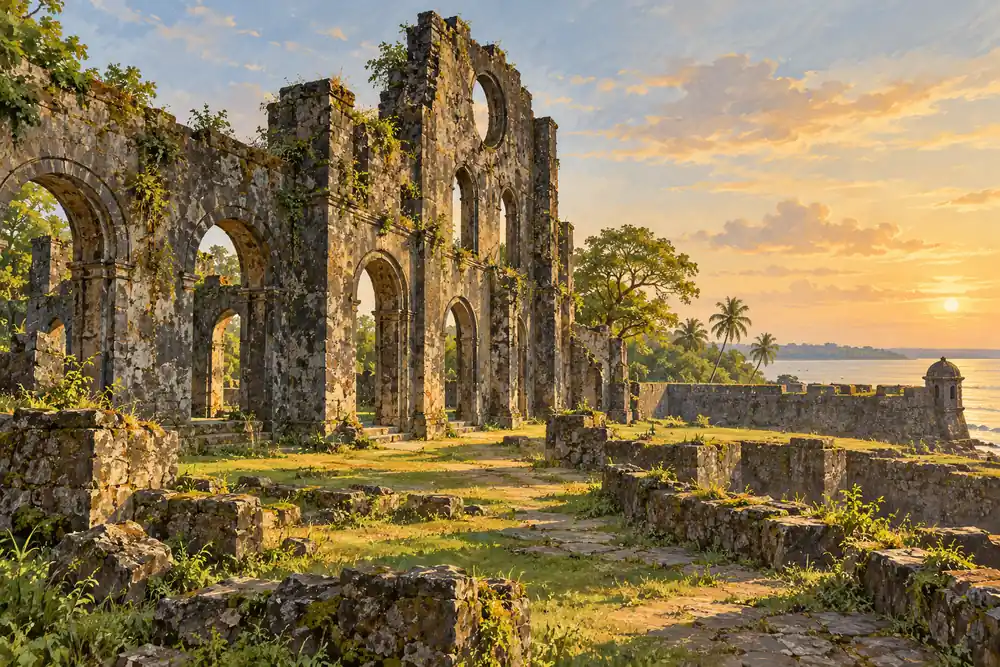
Begin by looking at the relationship between an entrance and the surrounding wall. A gateway controlled movement into a settlement; its position was part of the defensive layout. From a public walking path, observe the thickness of the masonry and how an opening changes the view ahead. This gives an ordinary entrance more meaning than simply treating it as a photograph stop.
For a useful comparison, take one wider picture showing the wall and surrounding ground, followed by a closer picture of an arch or doorway. Together they record both scale and detail. Keep your route on accessible ground and follow any barriers: a satisfying view does not require climbing a wall or stepping onto an unstable ledge.
Church ruins and architectural details
The church ruins are among the architectural features that draw visitors to Vasai Fort. Roofless spaces, surviving arches and weathered openings create an interesting meeting of building and sky. Rather than rushing from one structure to another, choose a few details to study: the shape of an opening, the line of a wall, or the way sunlight falls through a doorway.
Where a sign identifies a particular structure, use that identification in your notes and photo captions. If the building is not clearly labelled, a descriptive caption such as “stone arch inside Vasai Fort” is more useful than guessing a church name. This keeps your own record accurate while still capturing the character of the place.
The idea of a town inside the fort
Between the individual ruins, leave a little time to look at the spaces that connect them. The most interesting question is often how people moved between buildings and how different functions shared the enclosure. The district account’s reference to storage, water and cultivation helps explain why a fortified settlement needed more than impressive outer walls.
This is also a good way to make the visit engaging for children. Ask them to find an entrance, a sheltered space and a place where supplies might have been kept, then discuss how those needs would differ from a modern home. Present the exercise as observation and imagination, keeping confirmed information separate from your guesses.
How to reach Vasai Fort
Vasai Road is the practical railway starting point named by Maharashtra Tourism. From the station, continue by local road transport towards Vasai Fort on the western side. Show the driver the full destination on your map so the drop is arranged for the fort rather than simply for the wider Vasai area.
If you prefer a bus, check the current destination and onward connection at the local stop. Routes and service patterns can change, so an old route number copied from a travel blog is less useful than confirming the journey on the day. For a group, an auto or a booked vehicle can make the final stretch easier to coordinate.
For broader journey planning, use the guide to reaching Vasai alongside the destination map. Keep the station journey and the local transfer as two separate parts of your plan, especially if you are travelling from another part of Mumbai.
Drivers should navigate to the named attraction and follow the current approach and parking instructions. Avoid fixing your entire schedule around a single predicted travel time; the starting point and traffic matter. Before beginning the walk, decide where you will meet your driver or look for return transport. Save that location while you still have time to check it comfortably.
A simple two-hour visit plan
Use this as a flexible sequence rather than a fixed guided route. On arrival, read any available information and establish which areas are open. Spend the first part of the visit orienting yourself around an accessible entrance and the wider layout. This makes it easier to return to your starting point later.
Next, give most of your time to a small selection of structures. Pause at a gateway, explore a clearly accessible architectural space and look at a few surviving details. If your group enjoys history, discuss the maritime role and the 1739 change of control here, where the buildings give the story a visible setting.
Use the final portion for photographs and a slower return. A water break is worth including before anyone becomes tired. With children or older relatives, shorten the walking loop and spend more time at the first worthwhile stop. The aim is a coherent visit, not the largest possible number of structures.
A morning outing can start with a local breakfast. The misal pav guide for Vasai helps you choose a stop along your route. Treat breakfast as a separate journey leg and check the selected outlet’s hours; the restaurants are not all beside the fort.
Choosing the season and time of day
For comfortable walking, I would plan a morning visit or an earlier afternoon start that leaves enough daylight for the return. Cooler weather is helpful when your group wants to stay outside for longer. In warmer conditions, reduce the walking distance, carry water and make shade breaks part of the plan.
After rain, the greenery can make the masonry particularly attractive to photograph. Choose shoes with grip and assess the actual condition of each path before following it. A shorter walk through open, accessible areas can still give you a satisfying visit when you would rather keep the afternoon gentle.
Light also changes the photographs you bring home. Direct sunlight makes textures and shadows prominent, while softer light makes it easier to include both walls and sky in one frame. Decide whether you care more about a comfortable family walk or a particular photographic mood, then plan the start around that priority.
Photographing the fort thoughtfully
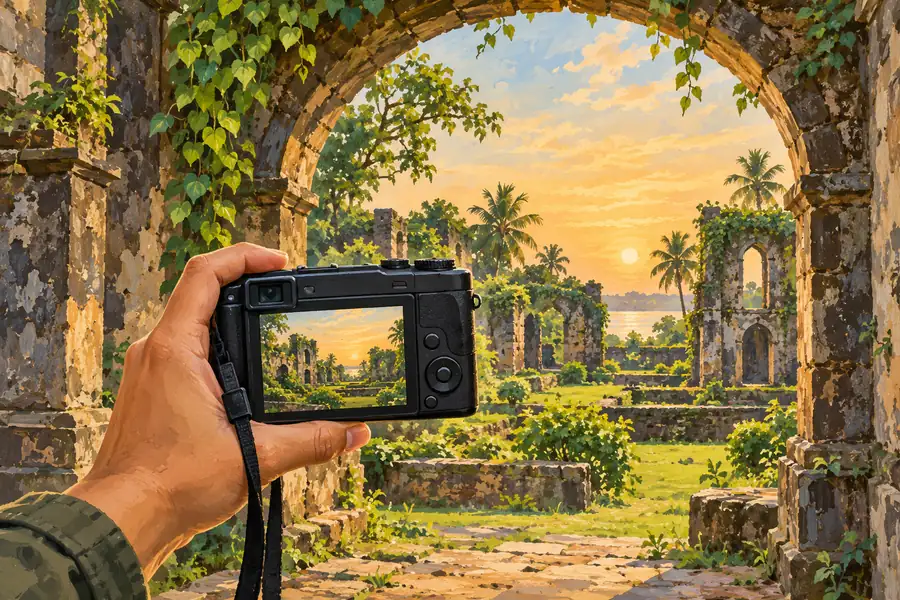
Start with three kinds of image: an overall view, an architectural detail and a photograph that shows the setting. An arch photographed straight on can emphasise shape, while a side angle can show wall depth. Include a person only with their agreement, and keep them on the normal walking surface rather than posing on masonry.
A phone is enough for a thoughtful record. Tap on the bright sky to control exposure, then check whether the stone detail remains visible. Step back when you want to show scale and move closer only along a clear path. Do not remove vegetation, rearrange stones or mark a surface to improve a frame.
For a commercial shoot, organised event or drone use, confirm the applicable permissions with the responsible authorities first. Ordinary sightseeing access should not be taken as permission for a production. Keeping photography modest and considerate makes the visit easier for your group and for other people enjoying the same space.
Make it a fuller Vasai outing
If you want a coastal finish after the heritage walk, the Suruchi Beach evening guide is a useful next step. Plan transport between the two destinations and arrive at the beach with daylight to spare. They work well as separate stops, with a pause for water or food between them.
For a shorter outing, choose just the fort and one food stop. The Vasai vada pav shortlist gives you options for a casual bite before heading home. Choose the outlet that fits your return route rather than adding unnecessary travel simply to complete an itinerary.
My preferred approach is to give the fort a clear purpose: learn one chapter of Vasai’s history, notice a few architectural details and leave with a small set of meaningful photographs. That makes the outing enjoyable even when you do not explore every accessible corner. The enduring attraction of Vasai Fort is the opportunity to slow down and read the old coastal town through the spaces it has left behind.