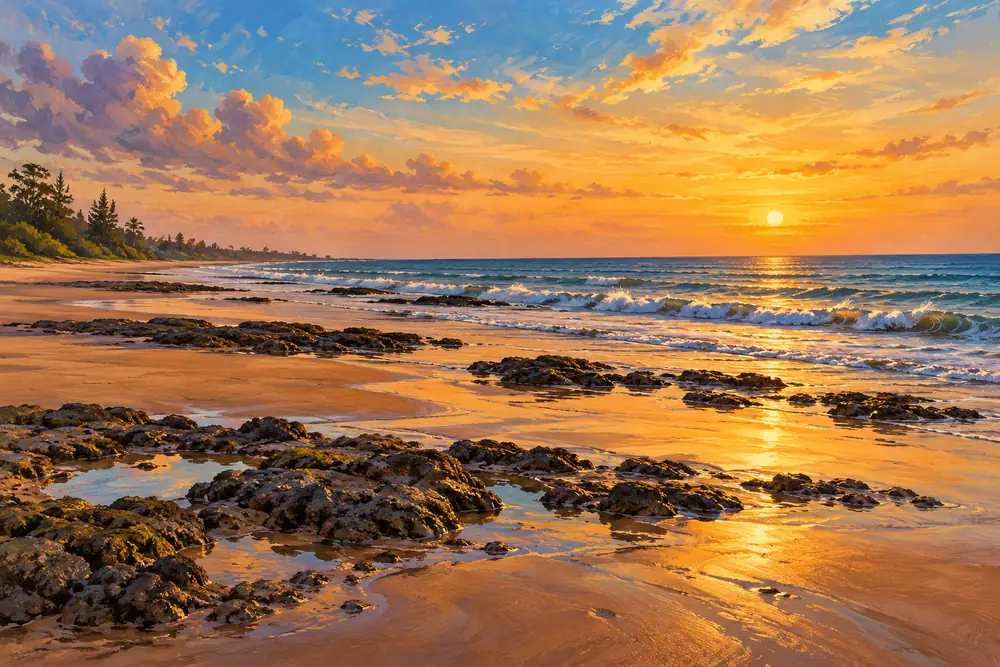
Bhuigaon Beach offers a lovely way to spend time on the Vasai coast when you enjoy looking closely at a landscape. The open sand, sea horizon and changing shoreline make it suitable for an easy walk, but there is another reason to give it attention: parts of this coast include rocky intertidal habitat alongside the sandy beach.
I recommend a visit built around observation rather than a packed activity list. Choose a comfortable stretch, notice what the tide reveals, and leave time to sit with the view. This guide explains the beach’s setting, how to plan the journey, and how to turn a short outing into a thoughtful coastal experience with friends or family.
Know the location before planning the journey
Bhuigaon is in Vasai taluka, Palghar district, on Maharashtra’s western coast. Search for the full destination name, Bhuigaon Beach, rather than navigating only to the village. Coastal place names and nearby approaches can overlap in travel listings, so confirm which public entrance your chosen route reaches.
A 2021 study published in the Journal of Scientific Research describes the Bhuigaon coast as mainly sandy, with a rocky patch near the Rangaon area. It identifies Vasai Road as the nearest railway station for its particular study site. This is useful geographical context, rather than a promise that every entrance has the same distance or travel time.
- Destination: Bhuigaon Beach, Vasai taluka, Palghar district, Maharashtra.
- Suggested outing: a coastal walk, sunset photographs and a pause on dry sand.
- Planning allowance: around two hours at the beach, with transport added separately.
- Important detail: confirm the public approach, return pickup and weather before leaving.
Getting there: the train journey and the local approach
Vasai Road is a useful rail starting point for this outing. From the western side, arrange local transport to the named beach approach. Show the driver the destination on your map and ask where the vehicle can stop. Agree on the fare and return arrangements before beginning the final journey.
If you are considering another station or a bus connection, compare the actual onward route rather than choosing purely by the station’s position on a map. A convenient connection and a clear pickup point matter more than a small difference in straight-line distance. Confirm any bus stop and remaining walking distance locally.
The guide to reaching Vasai helps with the wider journey. Keep the station transfer and beach approach as separate stages in your plan, particularly when travelling with children, an older relative or a larger group that needs to stay together.
For a drive, navigate to the beach and follow current signs and local instructions for parking. Leave enough room for residents and other vehicles to use the approach. Before walking away from the vehicle, save its location and check which path you will use on the return. A map pin is a navigation aid, not confirmation of parking permission.
Why the sandy and rocky coast deserves a closer look
The research on Bhuigaon studied marine macroalgae, commonly called seaweeds, in a selected rocky intertidal area. Its samples were collected in February 2019, and the work examined differences between tidal zones. The finding that matters for a visitor is simple: this shoreline contains habitats that change with exposure to the sea.
An intertidal area is covered by water at some stages of the tide and exposed at others. From firm, accessible ground, you may be able to notice differences between dry sand, recently washed surfaces and rocky patches. Treat this as an opportunity to observe, rather than a reason to follow the retreating water out across rocks.
The study does not mean that every visit will reveal the same organisms, or that its sampling area is a marked tourist stop. Keep any nature observations modest and accurate. Photograph something you can see, note the conditions, and avoid naming a species unless you have a reliable identification.
This adds a distinctive purpose to the outing. Bhuigaon can be more than a sunset background: it is also a place to think about the small-scale life and changing surfaces of a coastal habitat. Leave attached seaweed, shells and stones in place, and avoid turning over rocks to search beneath them.
A practical two-hour nature-and-photo outing
Spend the opening part of the visit finding a comfortable route and a clear reference point for the return. Choose a stretch of firm sand that suits the group. Look at the waterline before putting bags down, and place belongings above the active wave wash.
Next, take a short outward walk. Pause at two or three points where the view changes: a wider stretch of sand, a different angle on the sea, or a place where shoreline textures are visible from your path. Walking back the same way keeps the outing easy to coordinate.
Use the middle portion for observation and photography. Give yourself a small task, such as recording three textures or making one wide photograph and one detail photograph. This brings attention to the place without requiring a long walk or specialist equipment.
Finish with a sitting break, then return with time to spare. If sunset is the focus, check the sunset time for your visiting date and arrive well beforehand. If a morning walk suits the group better, keep breakfast and the return journey in the plan so the outing feels complete.
Photograph the coast as a landscape story
A useful photo sequence begins before the sunset. Make an establishing picture of the beach, a closer view of sand or rock texture, and a final image showing the evening light. Together these communicate the setting more clearly than several nearly identical photographs of the sun.
Keep the horizon level and use the shoreline as a line through the frame. Where rocks are visible from accessible ground, include them as foreground shapes rather than stepping onto wet surfaces for a closer angle. The contrast between low dark forms and open sky can make a pleasing composition.
For a detail photograph, look for a pattern you can reach without disturbing anything. Ripples in sand, a reflection or the boundary between dry and wet ground can be enough. Label the photograph descriptively if you are unsure what a natural object is; an honest caption is better than an impressive but incorrect identification.
When photographing companions, ask them to stand or sit on the usual walking surface. Take some portraits while there is still enough light for faces, and save silhouettes for later if the sky is bright enough. Put the phone away between pictures so the evening remains a shared experience.
A family visit with a small observation game
For children, turn the beach walk into a simple search for shapes and colours. Ask them to spot a curved line, a repeating pattern and three different colours in the sky or sand. They can point or photograph instead of collecting things, which keeps the activity light and leaves the shoreline undisturbed.
Older children may enjoy comparing two pictures taken from the same place at different times. Has the light changed? Has the water moved closer or farther away? This is a useful way to introduce the idea that a beach is a changing environment rather than a fixed playground.
Choose a clear play area on dry sand and keep children close. For a mixed-age group, make the first comfortable sitting place your base and use short walks from there. Confirm the approach and facilities required by anyone with a mobility need; a beach listing alone does not establish easy access to the sand.
If you are planning the rest of the day, the family day-out guide for Vasai is a useful companion. One beach visit and one meal can be a satisfying plan without repeatedly moving the group between destinations.
Choose the visit around weather and tide
For walking and sitting, choose a day when the weather supports the amount of outdoor time you want. Check rain and wind forecasts before travelling. Cooler conditions can make a longer visit comfortable, while a warmer afternoon may suit a shorter stay closer to sunset.
The tide affects how much shoreline is exposed. Use current tide information as background, then pay attention to the actual water movement at your chosen spot. Do not treat a forecast as permission to walk across channels, wet rocks or unfamiliar soft ground.
Keep this outing shore-based. A calm-looking surface does not establish safe swimming conditions, and a visible stretch of exposed sand does not establish a safe route to another beach. Follow local notices and use the familiar public approach for both arrival and departure.
Food, essentials and a simple budget
Carry water, a small snack, a sitting mat if needed and a bag for all packaging. Check any refreshments or washroom facilities you need before setting out. Having the essentials with you makes it easier to enjoy the coast without building the plan around an unverified stall or service.
For the budget, separate the train journey, local transport, any applicable parking charges and food. Get current prices for the services you choose. A hired return arrangement may cost differently from two independent rides, so clarify what is included rather than assuming an old online fare remains valid.
If your walk starts in the morning, the Vasai misal pav guide can help you choose breakfast on the way. Check the outlet location and hours and treat it as a separate stop; the listed breakfast places are not all beside Bhuigaon Beach.
Choose Bhuigaon for its own character
For another coastal outing, the Suruchi Beach evening guide focuses on a sunset walk in the Vasai Nagar area. Compare the approaches and your intended visit, then choose one beach to give your time to. Seeing both is better planned as separate visits than as a hurried coastal checklist.
At Bhuigaon, I would keep the focus on the meeting of sand, rocky habitat and changing sea light. Walk a manageable stretch, observe carefully and take a few photographs that tell the story of the coast. Pack everything back into your bag before leaving. That approach makes a short visit feel worthwhile and gives you a reason to return with fresh attention.