The Vasai–Bhayander ferry gives travellers a water crossing between two sides of Vasai Creek. It can be useful when your starting point and destination are close to the respective jetties, particularly when travelling with a vehicle. For someone beginning beside a railway station, however, the journey to the waterfront can change the calculation. Compare the entire trip before deciding that a ferry will be quicker.
This guide brings the operator’s published departure timings and fare categories into readable tables. The timetable supplied for this article is effective from 8 August 2026; the supplied rate card is effective from 1 February 2025. These are the dates printed on those notices, not a claim that every service and price has been reconfirmed for today. Check the official Vasai–Bhayander route page and the notice at the jetty before travelling.
Where the crossing fits into your journey
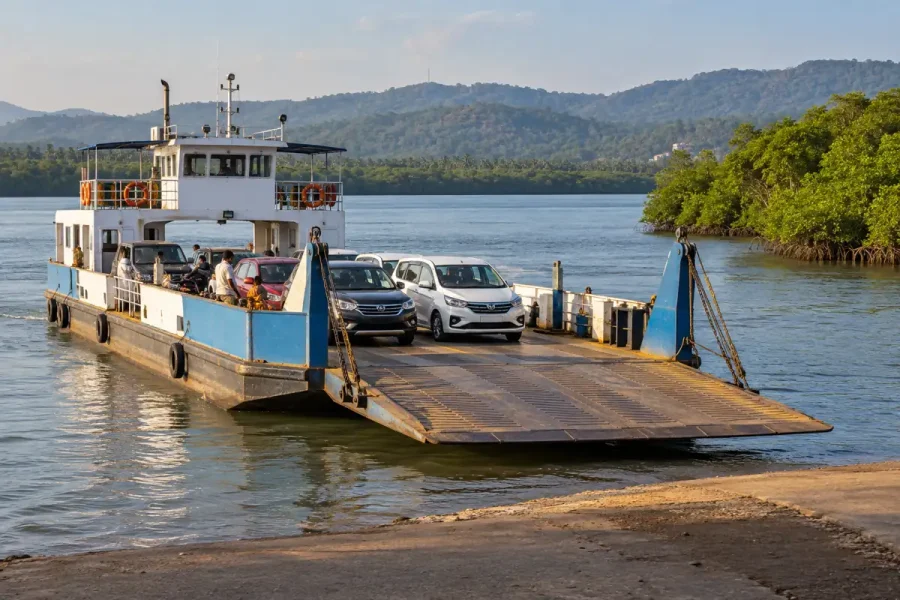
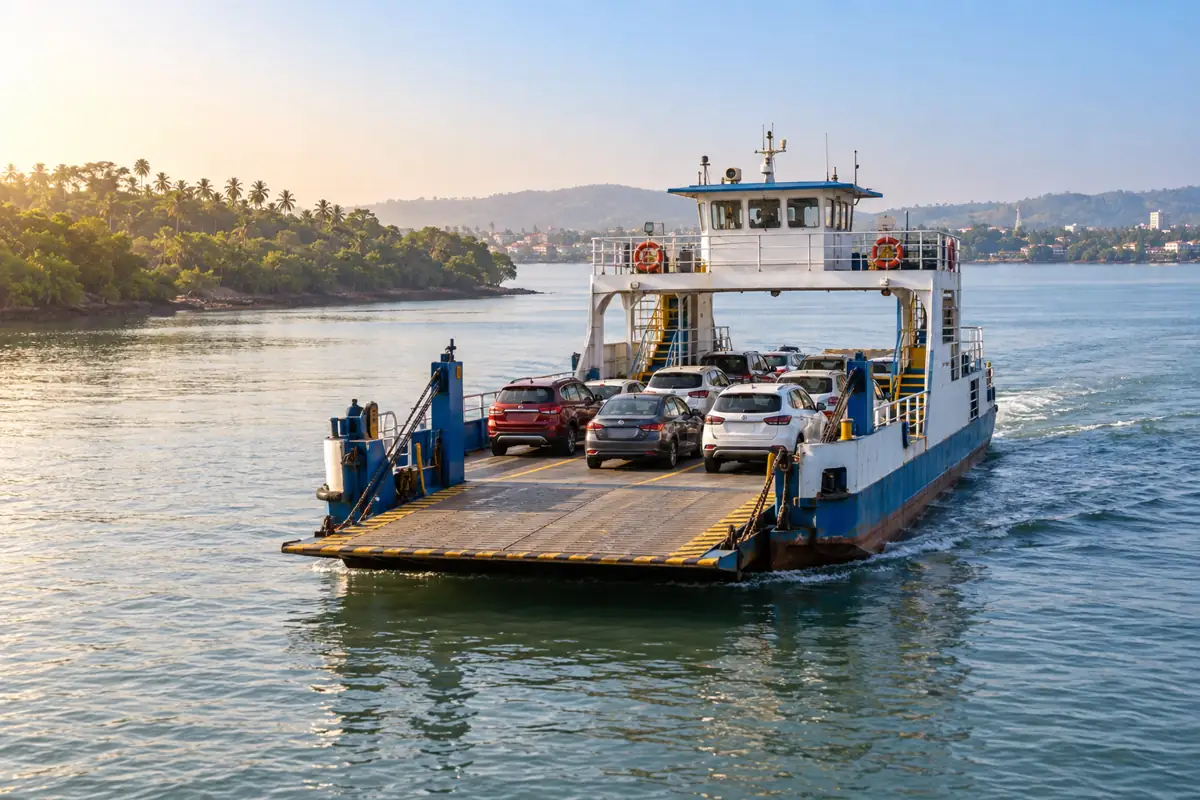
Suvarnadurga Shipping & Marine Services publishes this as a roll-on, roll-off service: vehicles use a ramp to board and leave the vessel. That is why its rate card covers motorcycles, cars and goods vehicles as well as individual passengers. The useful question is whether the waterfront route suits your actual errand, rather than whether the crossing looks shorter on a map.
A driver heading between western-side neighbourhoods may find the service worth comparing with the road journey. A foot passenger needs to account for local transport at both ends. Someone carrying shopping or travelling with children should also consider the waiting environment and the connection after disembarking. The Vasai East versus West guide helps place the western waterfront within a wider visit.
Ferry Time Table
The two columns below are departure times from different jetties. A row does not describe one boat’s departure and arrival. Read the column for the side where you will board. The published lunch break separates the morning and afternoon services, and the evening’s last departures are different on each side.
| From Vasai | From Bhayander |
|---|---|
| 7:30 AM | 8:00 AM |
| 8:30 AM | 9:00 AM |
| 9:30 AM | 10:00 AM |
| 10:30 AM | 11:00 AM |
| 11:30 AM | 12:00 PM |
| 12:30 PM | 1:00 PM |
| Lunch break | Lunch break |
| 2:15 PM | 3:00 PM |
| 3:30 PM | 4:00 PM |
| 4:30 PM | 5:00 PM |
| 5:30 PM | 6:00 PM |
| 6:30 PM | 7:00 PM |
| 7:30 PM | 8:00 PM |
| 8:30 PM | 9:15 PM |
The notice describes an approximate crossing duration of twenty minutes and warns that heavy rain may change timings. The operator’s route page also says tide levels can affect the schedule. Neither the stated crossing duration nor a departure time includes your local journey, queuing, loading or unloading. Leave flexibility around a fixed appointment and avoid building a tight connection around the last listed sailing.
Ferry Rate Card
Amounts below reproduce the supplied card’s base fare, tax and total columns. Vehicle descriptions have been translated from Marathi, retaining its seat counts and examples. Some examples may look unusual for the stated seat category; let the counter classify your actual vehicle rather than choosing a cheaper row yourself. This table is a dated reference, not a booking quotation.
| Vehicle / passenger category | Base fare (₹) | Tax (₹) | Total fare (₹) |
|---|---|---|---|
| Bicycle | 9 | 1 | 10 |
| Motorcycle, including rider | 60 | 6 | 66 |
| Empty three-wheel rickshaw, including driver | 100 | 10 | 110 |
| Empty four-wheel car (5 seats, including Swift/Ertiga); empty passenger vehicle (8 seats), including driver | 180 | 20 | 200 |
| Empty medium goods vehicle, with driver and helper (e.g. Tata 407) | 200 | 20 | 220 |
| Empty six-wheel medium goods vehicle, with driver and helper (e.g. Tata 709/Eicher 2015) | 250 | 25 | 275 |
| Empty passenger bus, truck or tanker, with driver and two helpers | 300 | 30 | 330 |
| Empty ten-wheel goods truck or JCB, with driver and two helpers | 500 | 50 | 550 |
| Goods, per half tonne | 27 | 3 | 30 |
| Empty trolley with tractor, including driver | 200 | 20 | 220 |
| Adult passenger (above 12 years) | 27 | 3 | 30 |
| Child passenger (3–12 years) | 23 | 2 | 25 |
| Goat, sheep or lamb (per four); dog, rabbit or cat (per animal) | 36 | 4 | 40 |
| Cow, bull or buffalo (per animal) | 50 | 5 | 55 |
The motorcycle category includes the rider, while several larger-vehicle rows specify a driver and helpers. Do not automatically add an adult passenger ticket for a person explicitly included in the vehicle category; equally, do not assume everyone else in the vehicle travels free. Ask how additional occupants are charged and whether your vehicle is treated as empty or loaded. Keep the ticket until the crossing is complete.
Jetty addresses and maps
Use the waterfront terminal names when planning your approach. A search for “Vasai” or “Bhayander” alone can lead to the town centre or railway station. The maps below are terminal-name searches; confirm the active boarding entrance locally. The operator website’s general company footer address in Dabhol is not the departure address for this route.
Vasai boarding side
Address / locality: Vasai Fort waterfront, Vasai West, Maharashtra
Bhayander boarding side
Address / locality: Bhayander West waterfront, Mira–Bhayander, Maharashtra
Getting to the ferry without losing the time you hoped to save
For a first visit, identify the final approach before you leave home. Save the jetty name and the departure column you need. If using a local auto or taxi, explain that you need the active ferry boarding point, not merely a waterfront viewpoint. Confirm your onward connection on the far side as well. A convenient crossing can still leave you with an awkward last kilometre.
For regional arrival options, the guide to reaching Vasai is a useful starting point. Add the waterfront connection separately rather than treating station arrival as ferry arrival. When driving, allow for approach-road traffic and a possible queue. Take essential vehicle documents with you and follow the boarding staff’s instructions about where to wait.
How to compare the cost of a family or vehicle trip
Write down the vehicle category first, then the occupants who need separate tickets. Include local transport if anyone is travelling on foot. For a return visit, make a second calculation for the way back rather than assuming the outbound ticket covers both directions. The supplied card does not explain every ticketing condition, so confirm whether the quoted purchase is for one crossing.
A useful budget has three parts: travel to the jetty, the crossing and travel after landing. Add food or parking only if those costs apply to your plan. Comparing this complete amount with another route is more informative than comparing a passenger fare with a whole taxi trip. For loaded commercial vehicles, ask about the goods category and measurement before joining the vehicle queue.
Boarding, seating and travelling with children
Treat the ramp and vehicle deck as working areas. Wait for staff directions before walking or driving forward, keep children close, and avoid standing where vehicles need to turn. If you have a stroller, limited mobility or bulky luggage, ask about the current boarding arrangement before committing to the crossing. Accessibility depends on the actual vessel, ramp and landing conditions.
The published timetable notice says life jackets are mandatory for everyone. Follow crew instructions about wearing them and where passengers should remain. Do not use the queue as a photo spot, and avoid leaning over the side for pictures. A family outing is easier when one adult handles tickets and another keeps track of the children and bags.
Planning a Vasai visit around the return sailing
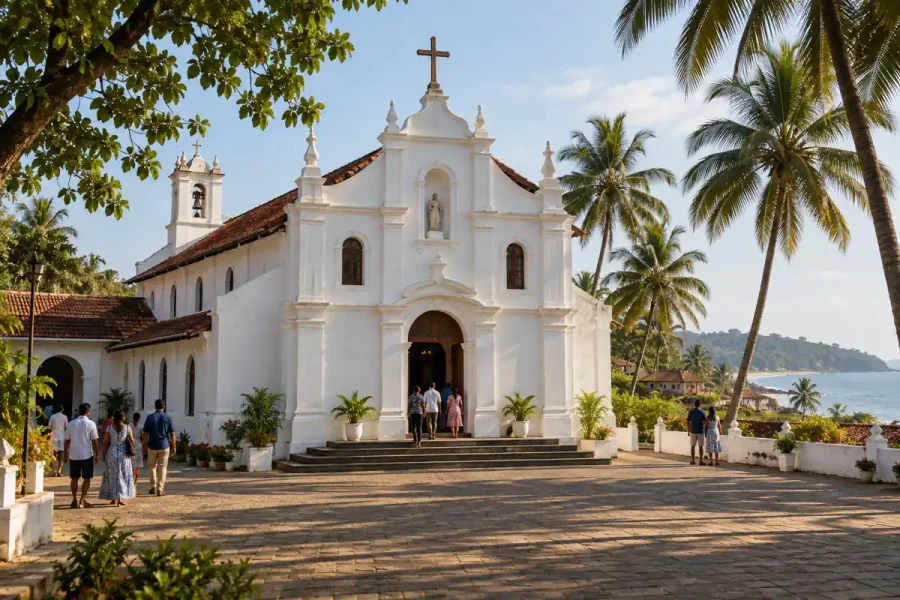
If the ferry is part of a sightseeing day, choose a manageable destination near the route rather than stacking several distant stops. The Vasai Fort travel guide is relevant to the Vasai waterfront, but access around a heritage visit and ferry boarding are separate activities. Keep the return journey in view while deciding how long to stay.
For a lunch break, use the Vasai food guide to consider options that suit your onward route. Do not plan a sit-down meal so tightly that a delayed bill or local journey forces you to rush to the terminal. Check the return departure column again before leaving the attraction, especially when travelling later in the day.
A practical check before leaving home
Review the latest operator notice, identify the correct boarding side, understand your fare category and allow a margin for the queue. Carry water and weather protection suited to the day, while keeping your hands free for boarding. Have an alternative route in mind if a sailing is suspended or the waiting time no longer suits your plans. The ferry is most useful when it fits the complete journey, with a workable return rather than only an appealing outward crossing.
Keep a useful record of the trip
Save the dated timetable with the route name visible, rather than a cropped column that loses its direction. At the terminal, compare it with the notice on display. If your group separates while buying refreshments or arranging transport, agree on a meeting point away from the loading area. This avoids last-minute movement across the vehicle queue. After landing, check your bags before walking away so that a missing item does not become a reason to return across a working ramp. For frequent travel, note your own door-to-door journey time on different days; it is more useful for future planning than assuming every trip will match the advertised crossing estimate.